
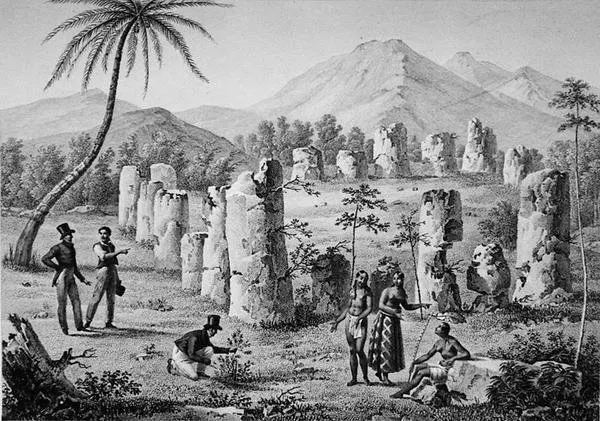
History has a habit of favoring the noise of battles over the devastating work of invisible forces. We tend to remember the flash of muskets and the collision of ships, while the true agents of ruin slip by unnoticed in the calm between storms.
Consider the Chamorro people of the Marianas. Before European contact, their numbers stood somewhere around forty thousand—a thriving world unto itself. By 1720, the census counted a mere four thousand. Father Hezel, looking back through the old accounts, pointed out that every landing of a foreign vessel brought with it not just trade or strife, but a pestilence that left hundreds dead in its wake.
Even in times of apparent peace, the arithmetic was grim. Between 1698 and 1702, when the violence had mostly died down, the island saw 240 births against 600 deaths, adding up to a net loss of eighteen hundred lives in five short years. When Father Hezel examined the numbers from the Chamorro-Spanish Wars, he found a startling truth: over three decades of skirmishing, battle deaths among the Chamorros likely numbered no more than a hundred and twenty. The war, for all its bitterness, was a small thing compared to the sickness.
It is a familiar tragedy, repeated across the Pacific from the Marianas to Kosrae. We preserve the stories of conflict because they fit neatly into our record books, but the real reshaping of these islands happened beyond the battlefield, brought ashore on the breeze and in the handshakes of newcomers. The deepest scars are often the ones made without sound.
comments
00