
When the island of Guam comes up, my mind usually drifts back to a fourth-grade classroom in my hometown, where the geography of exile seemed far larger than the world itself. In those days, Social Studies taught us that men and women who refused to yield were sent across the Pacific—a body of water so vast in a child’s imagination that it felt less like a place on a map and more like an edge off which people simply fell. We were taught of an island Magellan once called Islas de Ladrones, a name born of some early misunderstanding between European sailors and islanders who held different views on property.
It was only recently, when a local dispute flared up over erecting a monument to Apolinario Mabini on Guam, that I decided to look into the archives to see what actually became of him on that shore.
The exile of Filipino patriots to Guam was not a single event, nor was it reserved for men or a single foreign power. Years before the Americans turned the island into a detention post, Spanish authorities had already done the same. In September 1896, following the Katipunan uprising, Governor-General Ramón Blanco ordered the deportation of dozens of suspected revolutionaries. Among them was Melchora Aquino—Tandang Sora—who, at eighty-four years old, was sent across the sea alongside another woman, Segunda Puentes, and over a hundred others. She spent nearly seven years on Guam before returning home in February 1903.
By the time Mabini arrived in January 1901, the flag over Guam had changed, but the policy remained the same.
Yellowed copies of The New York Times from December 1902 describe the situation in plain newsroom prose. Mabini was a lawyer, not a soldier, and had been paralyzed from the waist down since an illness years earlier. Yet military authorities regarded him as the most influential mind in the revolution. The trouble with Mabini, as the correspondent noted, was that he stood by his principles and refused to take an oath of allegiance to the United States.
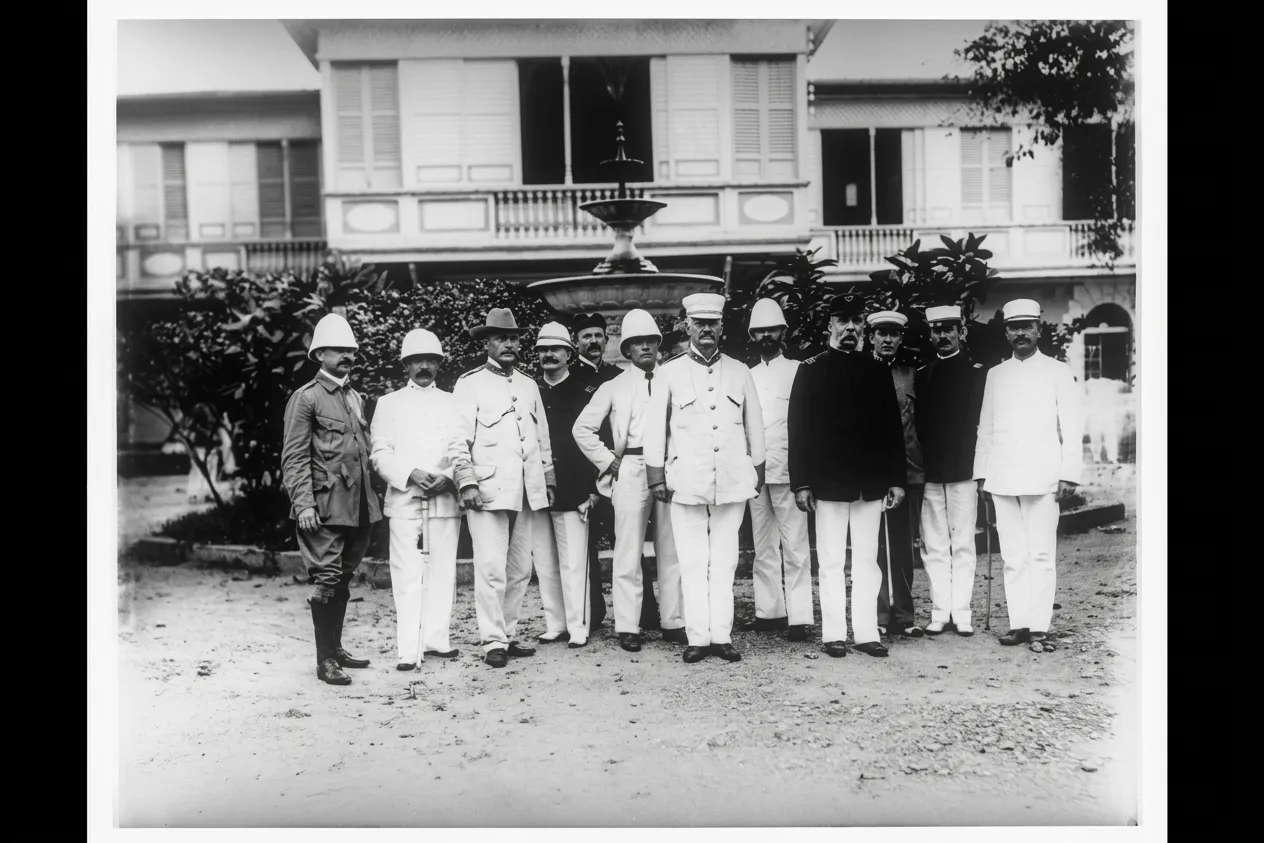
General Elwell S. Otis, the military governor in Manila, had tried talking to him. He had Mabini brought from prison to his headquarters twice, attempting to persuade him that resistance was useless. Mabini was polite, sat quietly in his chair, listened to the arguments, and then remained exactly where he was.
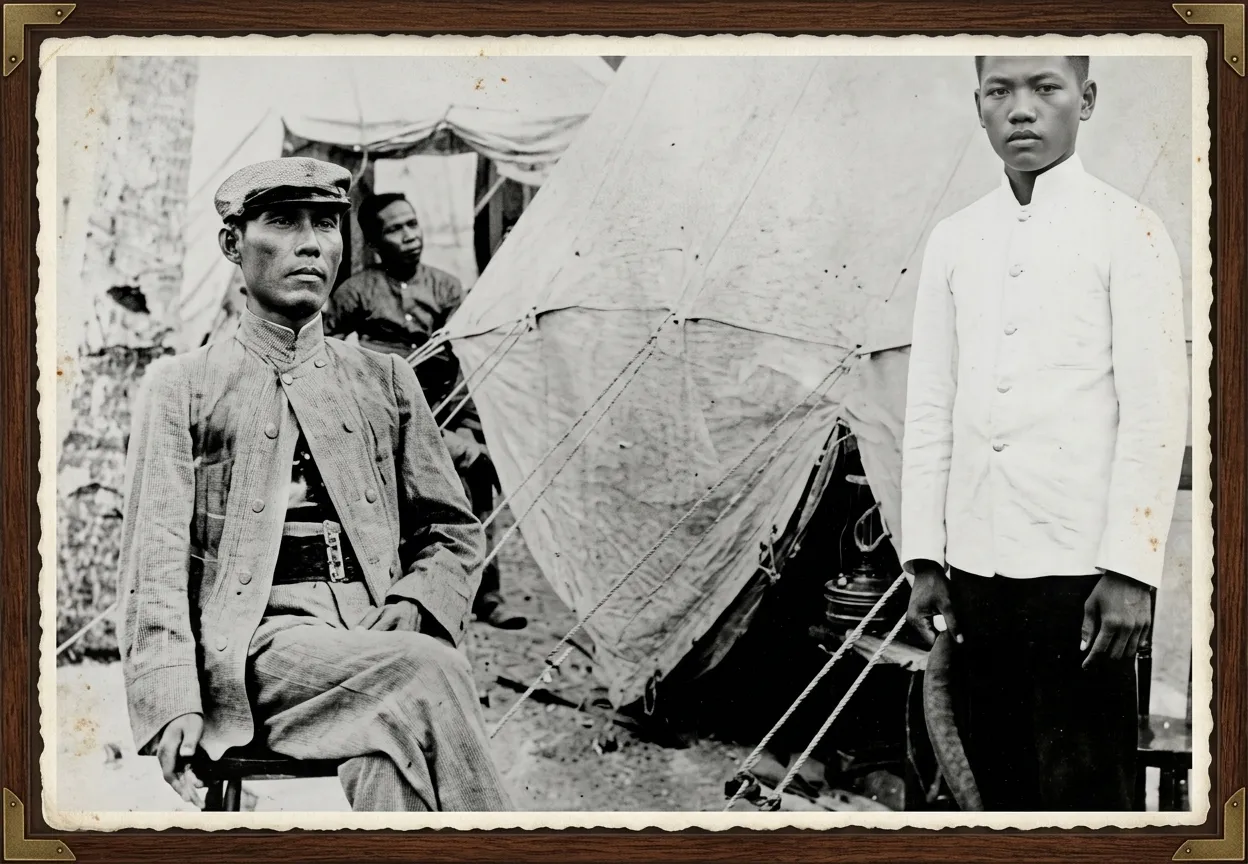
When General Arthur MacArthur replaced Otis, he chose deportation over persuasion. He placed Mabini on a list of officers and leaders to be sent away without trial. On January 15, 1901, Mabini was carried aboard the US Army transport Rosecrans. Because he could not stand or walk, his brother went along to care for him. Nine days later, the ship reached Guam. At the Presidio de Asan, under guard by American Marines, the prisoners lived in canvas tents pitched against the heat until wooden quarters could be built.
Reading those accounts alongside Hazel Clark Taylor’s 1918 biographical sketch in the old Philippine Review, the political standoff in Washington seems almost absurd. Anti-imperialists like Carl Schurz and Charles Francis Adams wrote to President Theodore Roosevelt, warning that holding a paralyzed man in captivity without charges was illegal and dangerous to his health. In the Senate, George Frisbie Hoar praised Mabini’s state papers, comparing them to early American political documents, and asked why the Republic was afraid of "a statesman whose papers won the admiration of the world."
By August 1902, as Taylor noted, the government offered to let the exiles return if they took the oath. Most signed and left. Mabini stayed in his camp quarters. Even when President Roosevelt informed the Senate in January 1903 that Mabini was free to go anywhere in the world—London, Paris, or Tokyo—except the Philippines, he stayed put. He wanted to return first, see the condition of the country for himself, and decide if the peace was real.
Somehow under duress from the William Howard Taft administration, and due to his failing health, Mabini recognized taking the oath would allow him to come home and continue the fight from within. So, he took the oath of allegiance on February 26, 1903, before the Collector of Customs—landing back home at roughly the same time Tandang Sora was returning from her own long exile on the same island.
Monuments usually go to people who command troops. But the exiles on Guam were memorable for a simpler reason: they sat in small quarters, kept quiet, and refused to sign until they were ready.

comments
00