
More than a decade ago, my friend Scott sent me an email address and an introduction to Dr. Mike Carson. I wrote to him and said I wanted to cover his archaeological work on Tinian for the Marianas Variety.
I remember those early reporting days only in pieces: a short phone call to introduce myself, then a long run of emails with my questions. Even by email his excitement was plain. He and Dr. Hsiao-chun Hung had been excavating just north of the House of Taga, and what they were finding pointed out to sea.
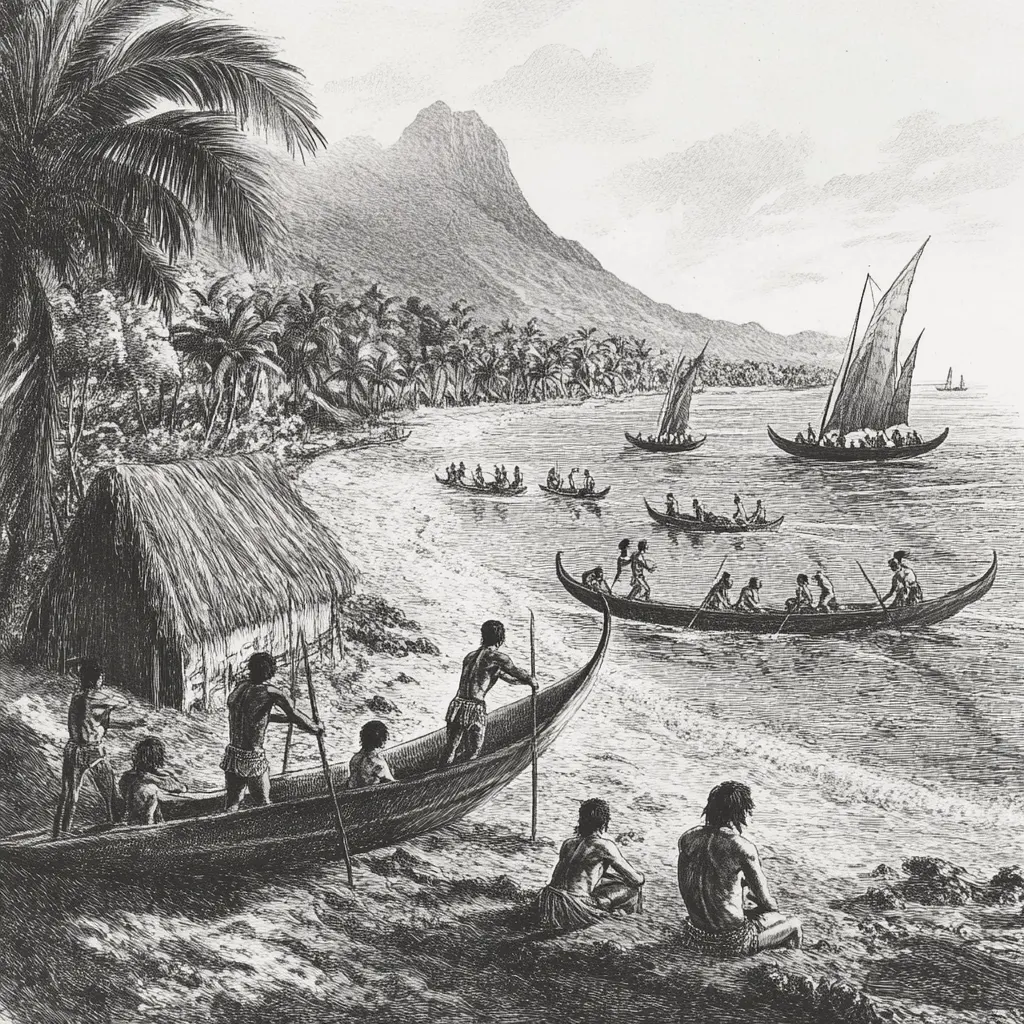
Their discoveries suggest that some 3,500 years ago, a small group of travelers crossed more than two thousand kilometers of open water. No other part of the remote Pacific was inhabited at the time, so it may have been the longest ocean crossing in human history up to then. Those sailors steered by the stars toward a horizon with nothing on it, looking for land no one had ever seen.
The archaeologists were following Father Marcian Pellett, who dug at the same spot in the 1950s and found the oldest decorated pottery in the Marianas. Each layer of soil is older than the one above it. Near the top are burials from the Latte Era; the bones stay on Tinian and will be reburied there. Near the bottom, under centuries of dirt, are the remains of a much older settlement: a paved house floor, post holes, tools, ornaments, scraps of food, and broken clay pots.
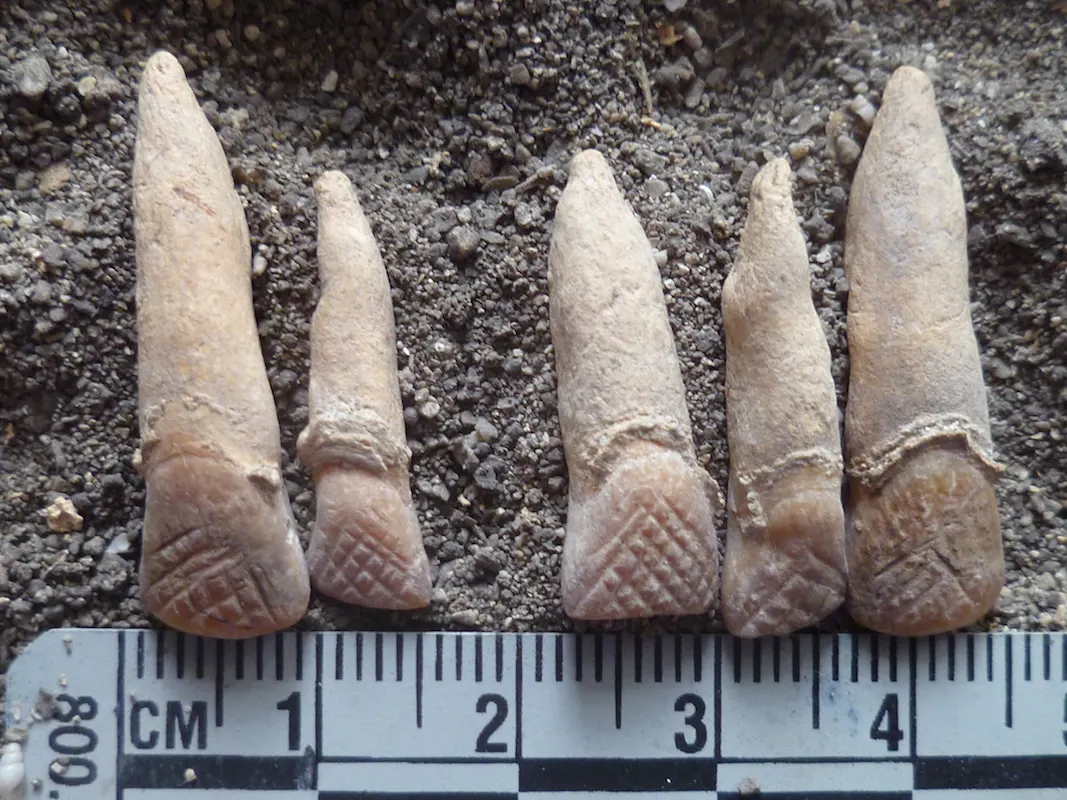
I was born in the Philippines, so what Carson calls the "pottery trail" caught my attention. The same finely decorated pottery appears in the northern Philippines about 3,800 years ago and in the Marianas three centuries later. It doesn't show up anywhere else in the surrounding region until much later.
"We are re-thinking much of what was previously believed about the first people to inhabit the remote Pacific Islands," Carson wrote.
When I'd answered his last email, I sat down to write the story. I kept thinking about those canoes and the people who sailed them.
More than ten years ago, I wrote about the archaeological work led by Dr. Michael T. Carson and Dr. Hsiao-chun Hung. When I spoke with Dr. Carson on the phone, I could hear how excited he was about their work in the Marianas. Their excavations just north of the House of Taga on Tinian suggested that the first settlers of the Marianas had made what may have been the longest ocean crossing in human history up to that time, some 3,500 years ago.
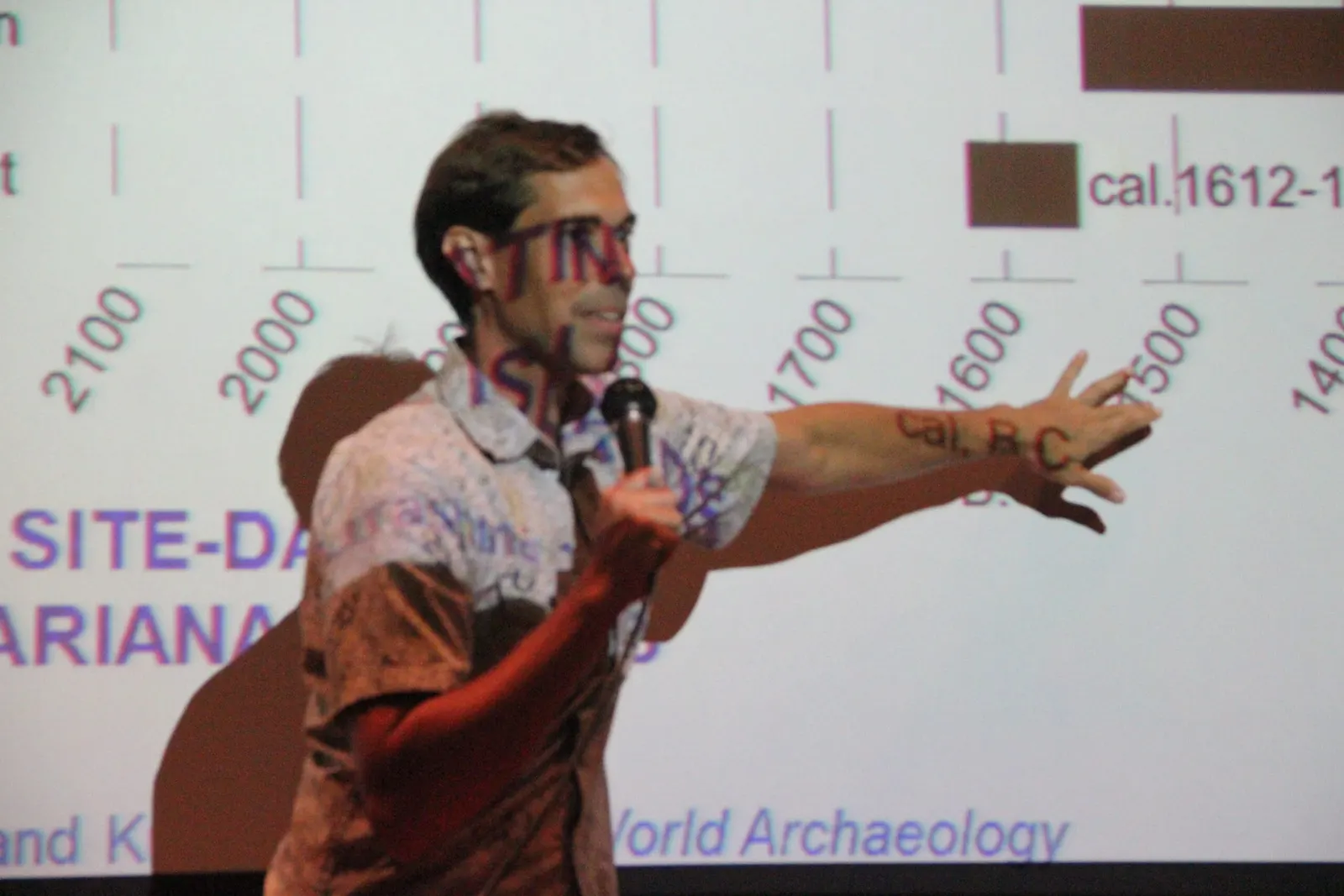
"For years, the prevailing belief was that the first remote-distance island settlement occurred in Melanesia and Polynesia around 3,000 to 2,800 years ago," Carson said. "But what we've found here in the Marianas suggests an even earlier migration, and over a much greater distance: more than 2,000 kilometers across open ocean."
Those voyagers had only the stars to steer by, and they reached these islands before people had settled anywhere else in the remote Pacific.
"That constituted the longest ocean-crossing in human history at the time," Carson said. "No other place in the remote Pacific Islands was inhabited then."
Carson and Hung were digging where Father Marcian Pellett had dug in the 1950s. At that site he found finely decorated pottery, the oldest of its kind in the Marianas. Each time Carson and Hung went back to Tinian, the site gave them more.
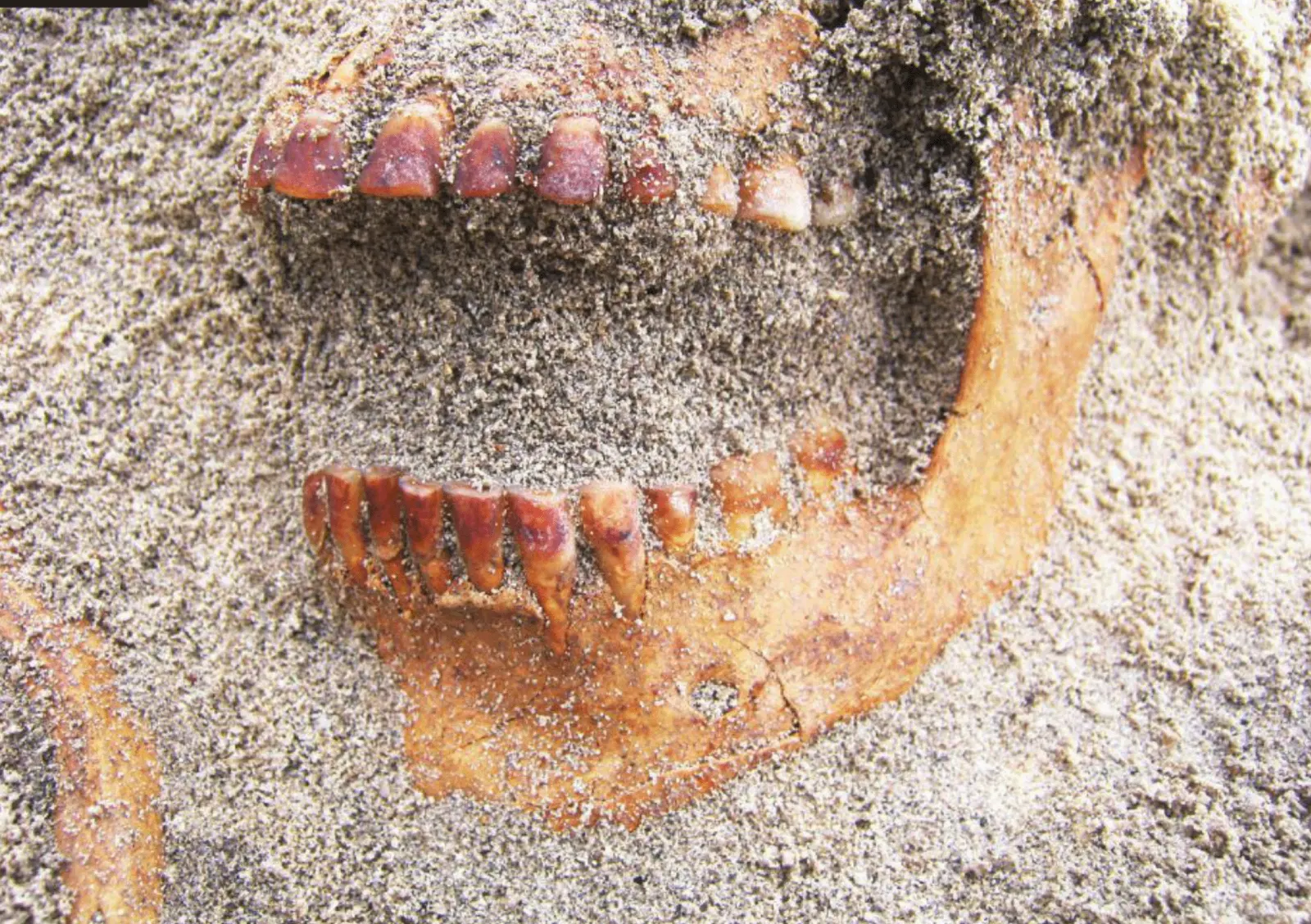
On one trip they found human remains in several burials. "The upper layers contain burial sites associated with the latte sets, dating back approximately 1,000 to 300 years ago," Carson explained. "All of the bones will remain in Tinian for respectful reburial as soon as possible."
What interested them most was further down.
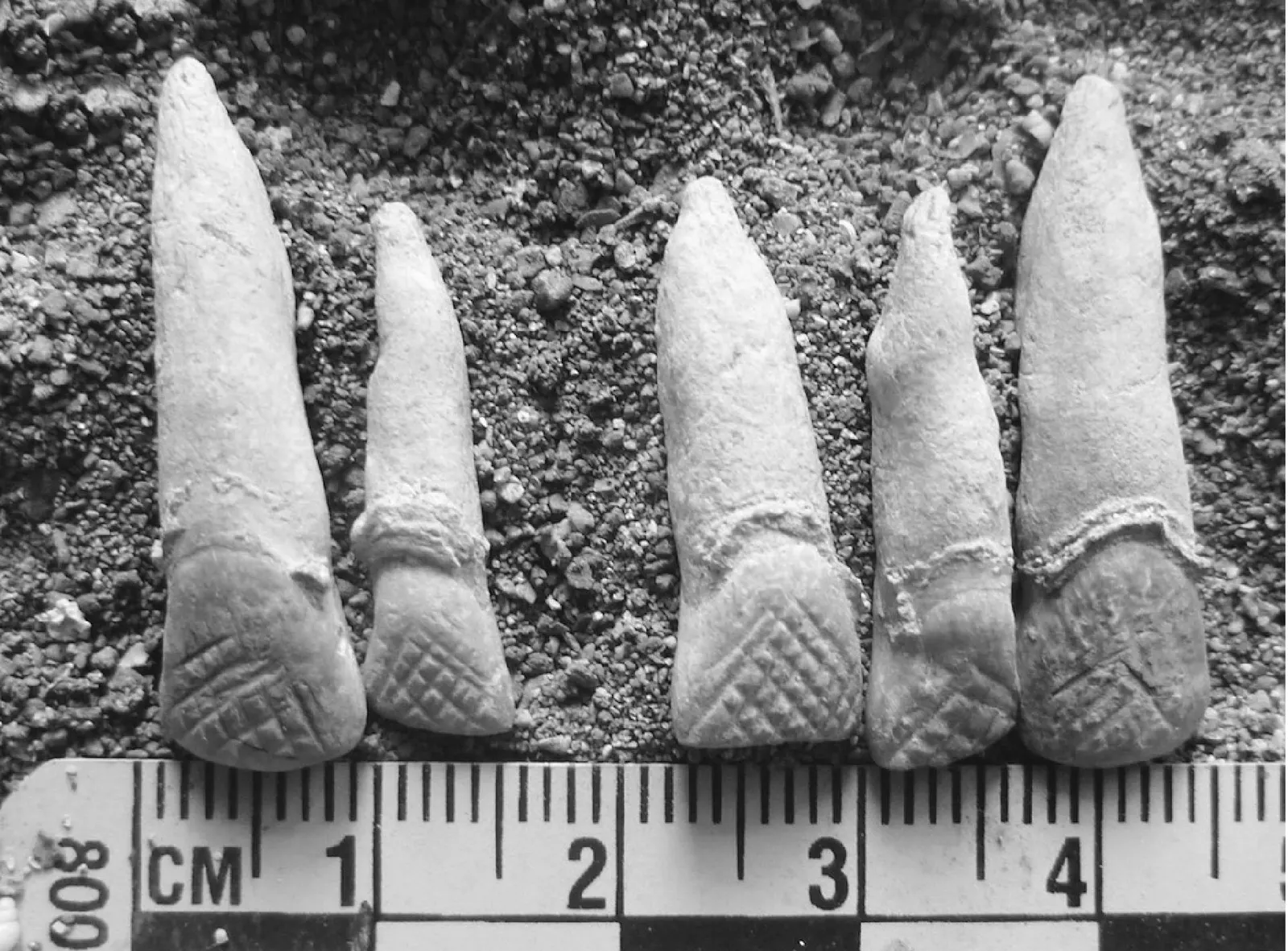
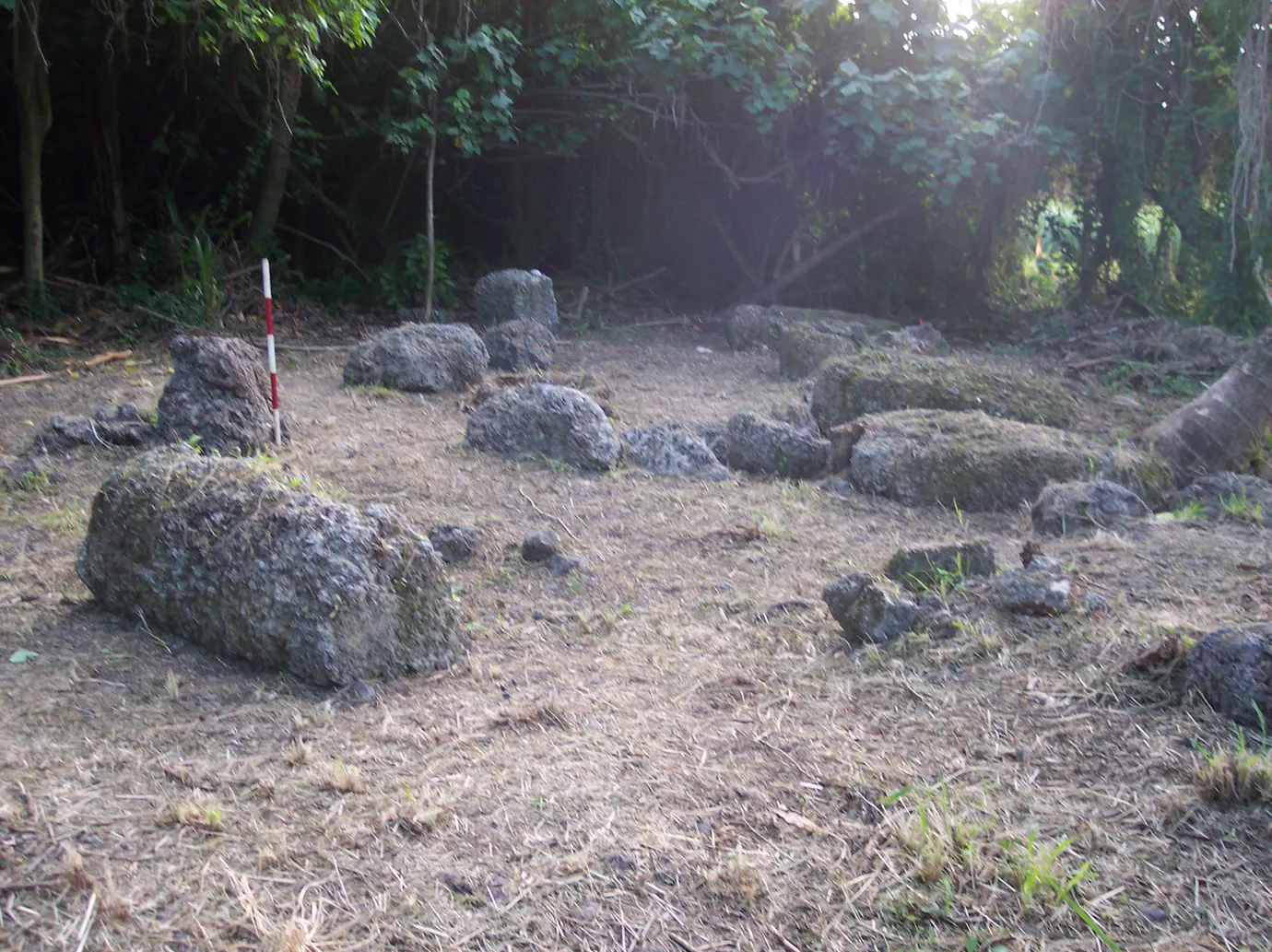
"We're still uncovering details from the lowest layer, but what we've found so far paints a fascinating picture," Carson told me. "We've identified a house floor and living area, carefully arranged with cobbles and boulders as paving. Some stones were positioned in circular patterns to support house-posts. Scattered around them, we've found broken pottery, shell and stone tools, ornaments, and discarded food remains."
The Pottery Trail
I was born in the Philippines, so what Carson calls the "pottery trail" from the northern Philippines caught my attention. The decorated pottery found in the Marianas closely resembles pieces found in the Philippines that are at least 3,800 years old.
"The decorated style first appeared in the Philippines about 3,800 years ago," Carson explained. "Then, 3,500 years ago, we see the same style for the first time in the Marianas."
The style doesn't appear anywhere else in the Asia-Pacific region until much later. "Only around 3,100 to 3,000 years ago do we start seeing vaguely similar styles in Indonesia," he said. "A more elaborate version of this design appears in 'Lapita' pottery from the Bismarck Archipelago around 3,400 to 3,300 years ago, continuing into Melanesia and West Polynesia between 3,000 and 2,800 years ago."
Near the end of our interview, I asked what it all added up to. "We are just beginning to understand these connections," he said. "We are re-thinking much of what was previously believed about the first people to inhabit the remote Pacific Islands."
The research was funded by the Chiang Ching-kuo Foundation and the Australian Research Council. It added to what is known about Chamorro history and raised questions about long-held ideas of who the first Pacific voyagers were.
When I hung up, I started writing the story for the Marianas Variety. I couldn't stop thinking about those first settlers and the nerve it took to sail into water no one had crossed.
comments
00