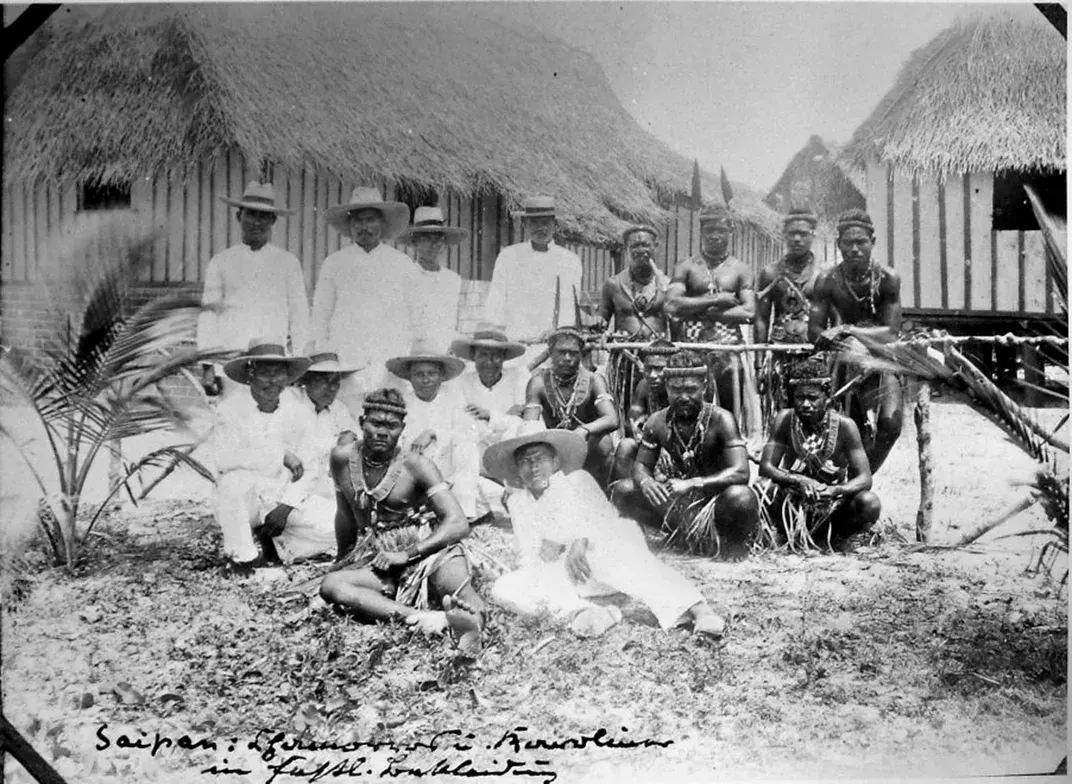
The nineteenth century was a restless, transformative stretch for the Marianas, though you would hardly know it from the standard histories. Listening more than a decade ago to a lecture by Carlos Madrid, a Spanish scholar with a gentle reverence for old documents, I was struck by how much of human history lies tucked away in unread primary sources, waiting for someone to pull the string. Madrid’s notion was that we ought to tell the story of the islands from the inside out, ”starting at the beach and looking toward the horizon, rather than staring down from the bridge of a European frigate. When you stand on the shore and look out, a remarkably lively world comes into view. Carolinians were crossing open water to trade and build homes. Chamorros were resettling Saipan. Whalers enjoyed a brief, booming season before the modern world moved on. And Spain, having presided over the place for two quiet centuries, finally reached out to tighten its grip on the Northern islands.
Madrid likes to break the century into three distinct acts: a long opening stretch from 1804 to 1850, an uneasy middle chapter from 1850 to 1885, and a brisk finale that brought the curtain down in 1899.
The ancient sea trade between the Carolines and the Marianas, which had fallen dormant when the early colonizers arrived, sprang back to life in 1804 after a local named Luis de Torres hitched a ride across the water on an American vessel. Before long, Carolinians were arriving in steady numbers, and Saipan began to fill with life once more. The French dropped anchor in 1819 under Louis-Claude de Saulces de Freycinet, spending three agreeable months measuring the coastline and taking down notes on the local customs. The whalers arrived on their heels in the eighteen-twenties, lingering through the sixties and keeping the docks of Guam busy with requests for fresh water and provisions. For a time, Guam also tended to the great Manila galleons plying the long route to Acapulco, until that particular line of business evaporated in 1815.
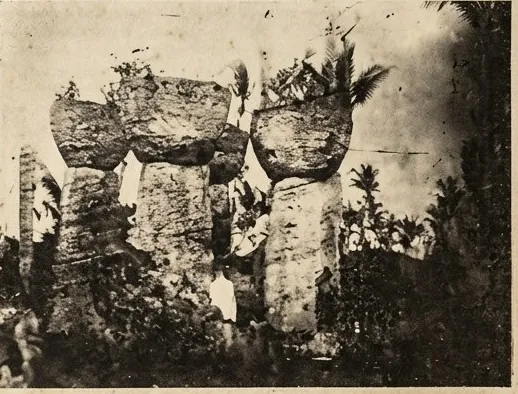
Civic life in those days was modest, local, and intimate. The basic unit of society was the barangay, overseen by a cabeza. If a cabeza played his cards right, he might be elected gobernadorcillo, becoming both town magistrate and mayor. Voting and office-holding were strictly male affairs, following the Spanish custom of the era. Power resided in the Casa Real—the government house. The old stone ruin on Rota remains the oldest standing structure in the Marianas today, whereas the former site of authority on Saipan now accommodates a Jollibee, where folks order fried chicken under bright fluorescent lights.
Spanish rule rested on two pillars: the law of the state and the authority of the Church. The spiritual foundation reached all the way back to the sixteenth-century Patronato Real, which gave royal sanction to the spread of the faith. A Jesuit school flourished on Guam for a time, and even after the Jesuits were banished, religious instruction carried on as a matter of daily routine.
Then came 1856, and with it, the smallpox. It likely stepped off a vessel arriving from the Philippines. Quarantine regulations existed on paper, as they so often do, but enforcement was loose. Madrid estimates that the disease swept away fully sixty percent of the population—a calamity beyond modern reckoning. By the eighteen-seventies, in the wake of the Cavite Mutiny of 1872, the islands found themselves serving as a distant penal colony for political exiles and dissidents. Food was already scarce, the soil was tired, and tempers among the locals and newcomers ran short.
By 1885, the broader world was closing in. The United States, Japan, and Germany had all begun casting appraising eyes across the Pacific, weighing the Marianas as strategic real estate. The Treaty of Paris tidied up the details in 1899 with the stroke of a pen: Guam and the Philippines passed into American hands, while the Northern Marianas were parcelled off to Germany. Just like that, the nineteenth century drew to a close, leaving the islands to adjust their sails for a brand-new set of masters.
comments
00