
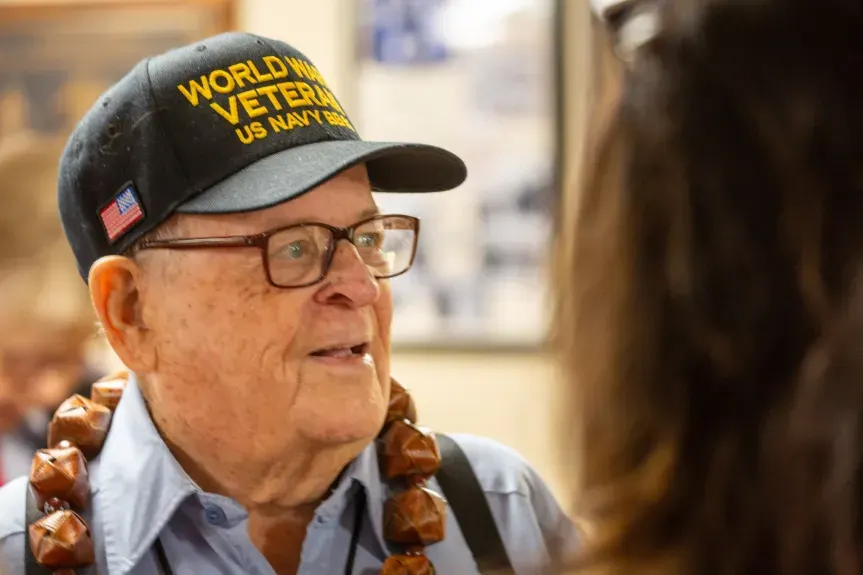
Lloyd Glick went to Saipan in February. It was 2014, and he had never set foot on the land before.
In the war he was young, and he played the trumpet. On the USS North Carolina there was no time for music. He sat in the dark behind the big guns, twelve miles out, and watched the grey smoke rise over the water. They fired the sixteen-inch guns three hundred and sixty times into the green hills until the trees were gone and the earth was brown and torn. They fired the five-inch guns two thousand times more.
When the men on the island welcomed him, he was embarrassed. He said the honor belonged to the Marines who went onto the beach and died in the coral.
"You were there for support," his wife said.
"I was there because the Navy put me there," Glick said. "I had no choice."
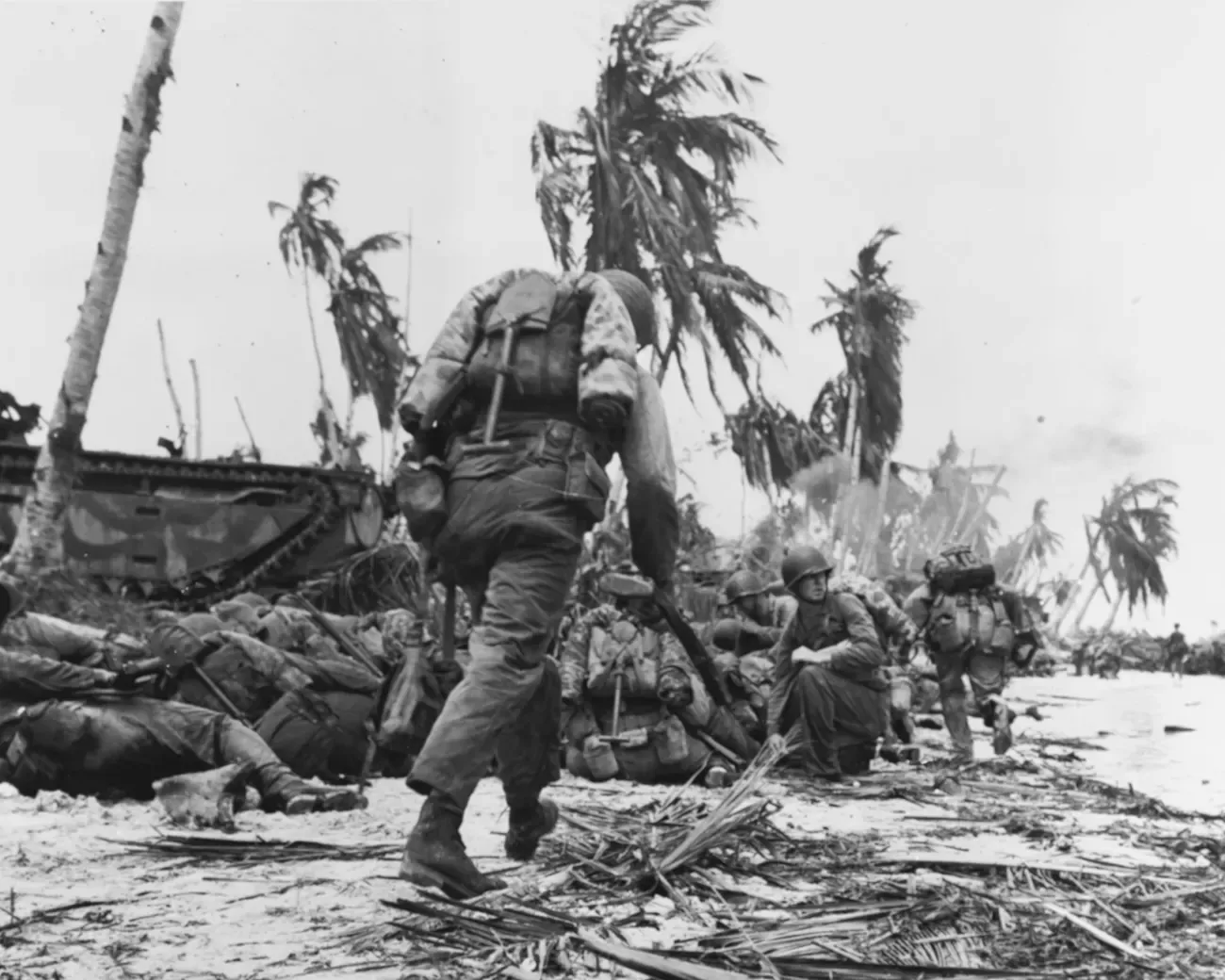
He had been at Tarawa first. The Navy was green then, and the coral tore the bottoms out of the boats and the men drowned in the surf. By the time they reached Saipan they had better boats. After Saipan came the Philippine Sea, and then Okinawa, where the suicide planes came out of the sun and everything changed.
Before the war he lived in Berkeley. He practiced the trumpet for an hour every morning, and he was good enough for the university orchestra before he was out of high school. On the Sunday Pearl Harbor was bombed, he was walking to the picture show. The movie stopped and the lights came up. He enlisted in April.
When the war ended, he went to Los Angeles. He read proof for the newspaper for six years. He walked a beat as a policeman for twenty years. He worked for an insurance company for thirty-five more, starting at the bottom and moving up through the offices until he was old.
They asked him what a man in uniform ought to know.
"Do everything to the best of your ability," Glick said. "That will be the key."
comments
00