
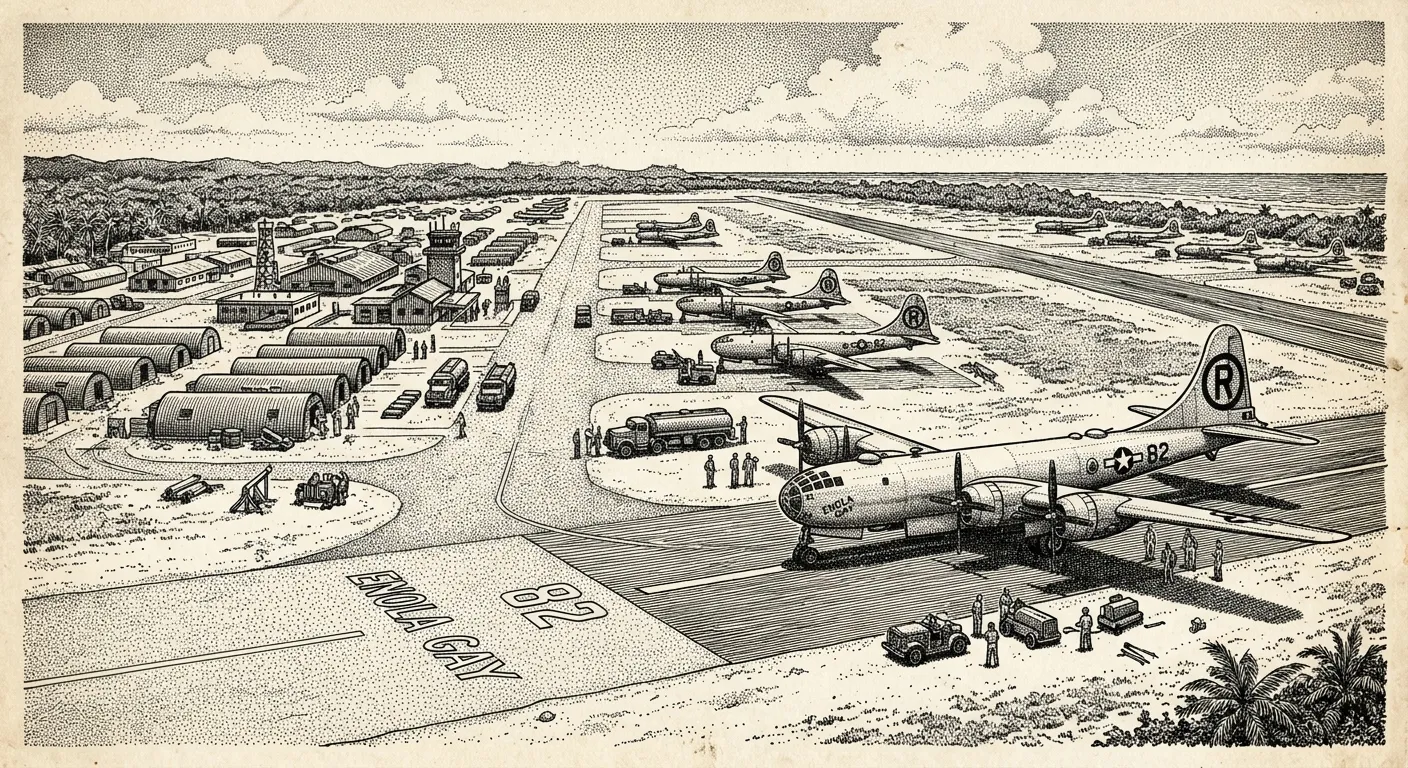
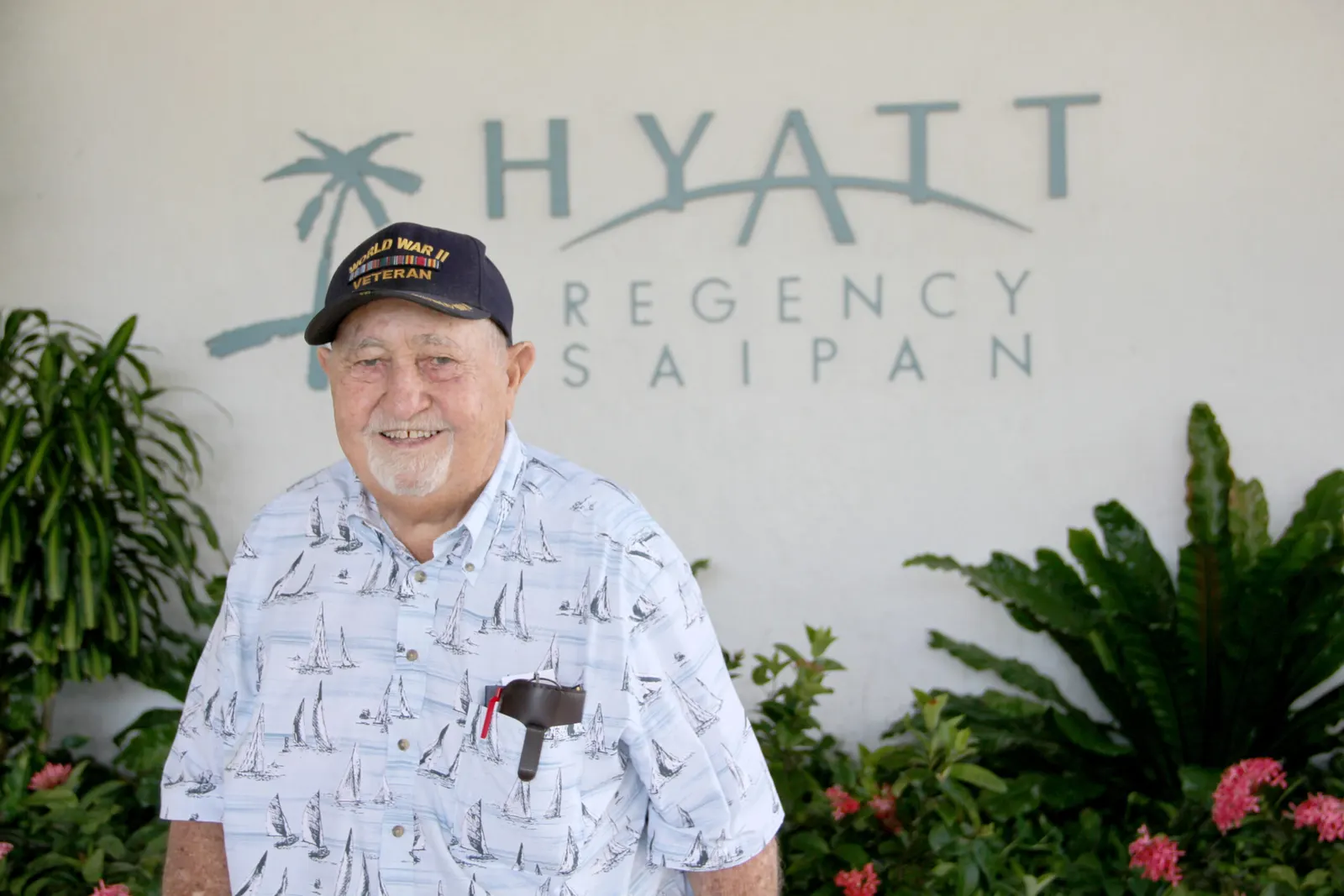
In 2008, while editing Island Locator, I accompanied WWII B-29 navigator Hap Halloran on a tour of Tinian, guided by local historian Don Farrell. Shot down over Tokyo and held as a POW, Hap wanted to visit the sites that shaped the end of the war—specifically the bomb pits, assembly areas, and the 509th Composite Group camp.
Driving north along Broadway—a main artery built by Seabees and named by New Yorker Capt. Paul Halloran after his home borough—we toured key historic landmarks:
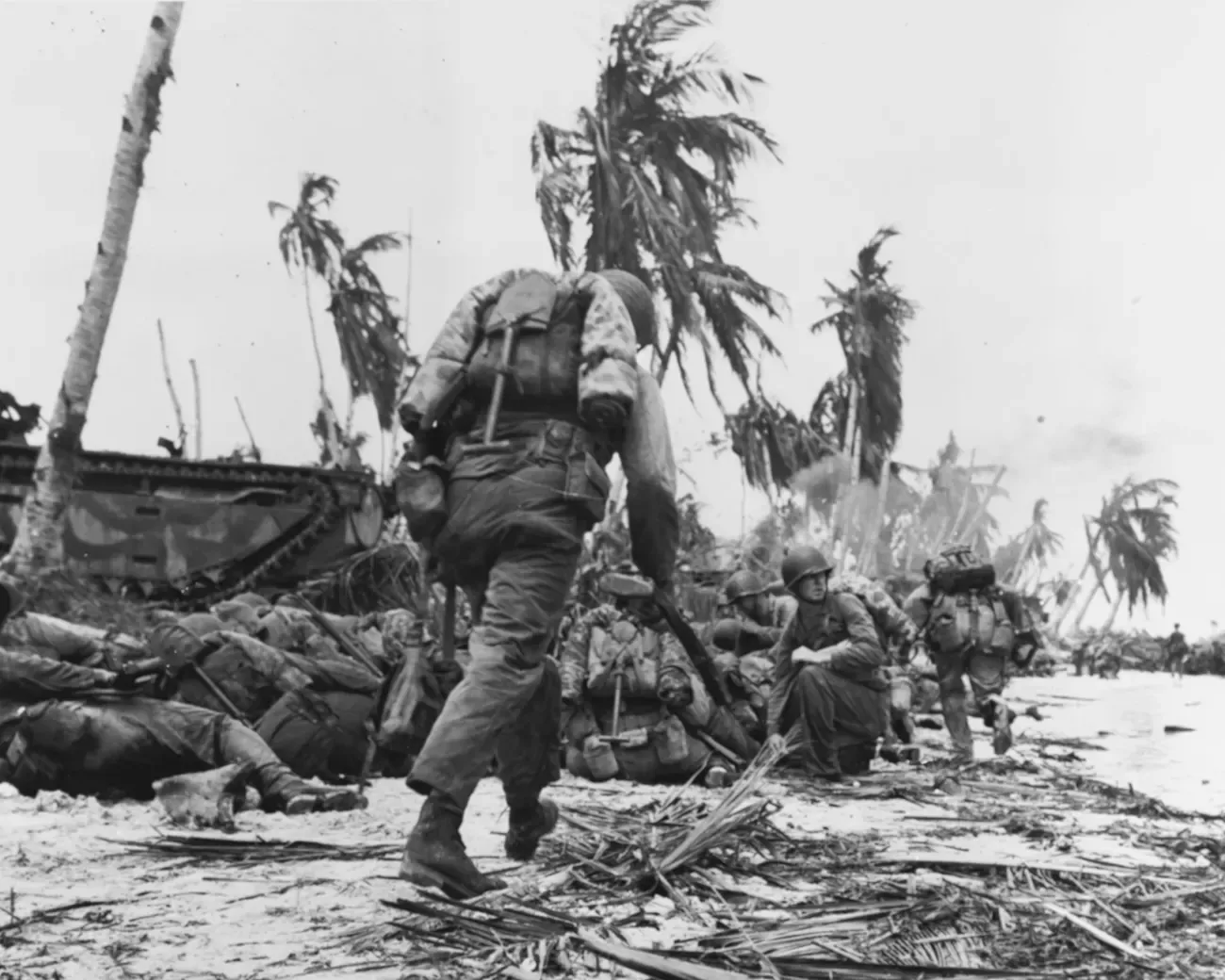
- Invasion Beach (Unai Chulu): Site of the July 1944 Marine landing, where Seabees used custom amtrac ramps to scale coral cliffs, outmaneuvering Japanese defenses in what Gen. Holland Smith called "the perfect amphibious operation."
- North Field & The Bomb Pits: Once the busiest airbase in the world, built by 12,500 Seabees working around the clock. Don clarified that both Little Boy (the uranium gun-type bomb used on Hiroshima) and Fat Man (the complex plutonium implosion bomb used on Nagasaki) were loaded from the same primary pit, with the second built strictly as a backup.
- The Missions: On August 6, 1945, Col. Paul Tibbets flew Enola Gay on a flawless run to Hiroshima. Three days later, Maj. Charles Sweeney’s Bockscar faced fuel pump failures, heavy smoke over Kokura, and a cloud-obscured Nagasaki before landing at Okinawa on fumes with just seven gallons of fuel remaining.
As our plane banked over the deserted, overgrown runways of North Field on our return to Saipan, Hap looked out the window and remarked, "Imagine... those now deserted runways were once the busiest in the entire world, and it’s at that very spot where the atomic age began. Remarkable."
In 2008, four of us took a twin-engine plane across the five-mile channel from Saipan to Tinian—a short hop over open water that brought us down onto an island where the war, and the world with it, took a sharp, permanent turn.
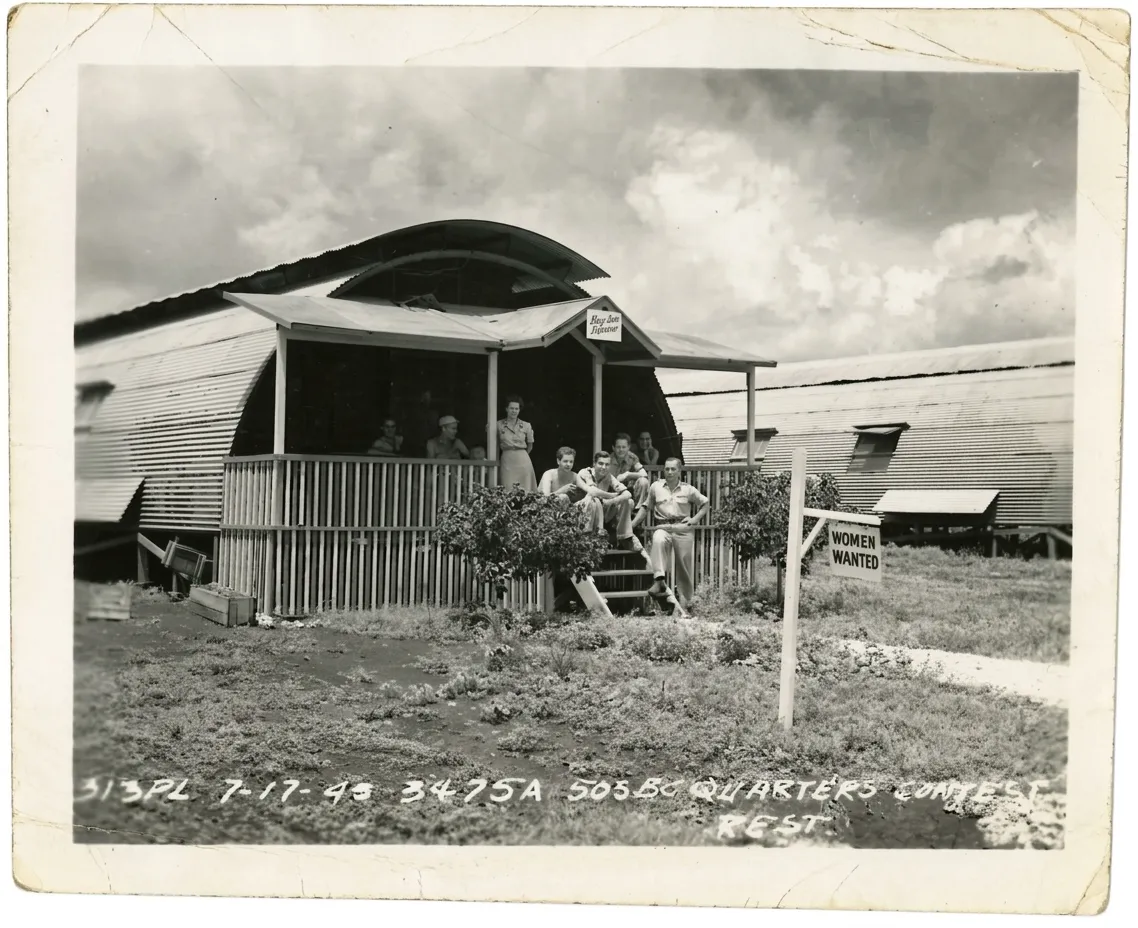
I was running Island Locator at the time. Our small party had come together around Hap Halloran. During the war, Hap flew B-29s out of Isley Field on Saipan as a navigator until a Japanese fighter shot his plane down over Tokyo. He spent the rest of the war in a prison camp, enduring small, deliberate cruelties that stayed with him the rest of his life. He had been back to the Marianas since, but on this trip he wanted to see Tinian—the bomb pits, the assembly huts, and the overgrown clearings where the 509th Composite Group set up camp.
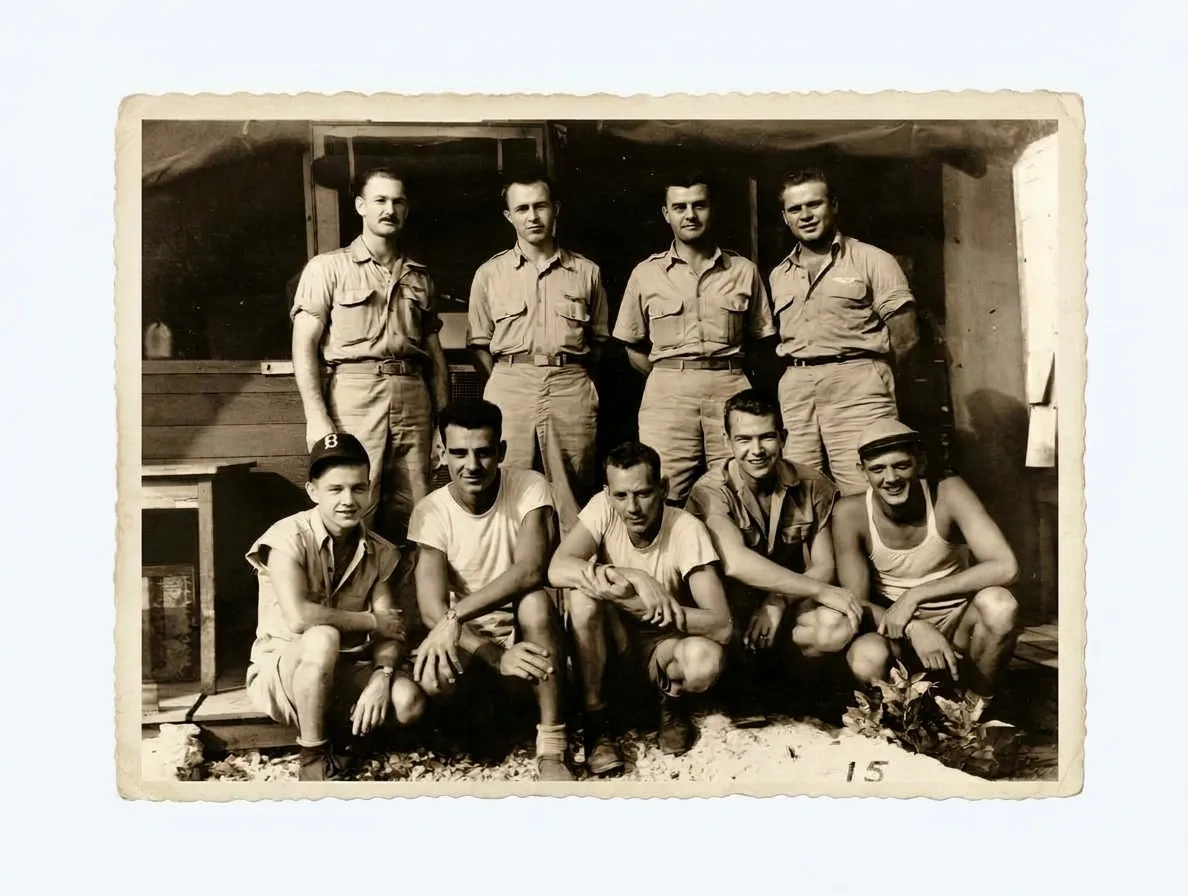
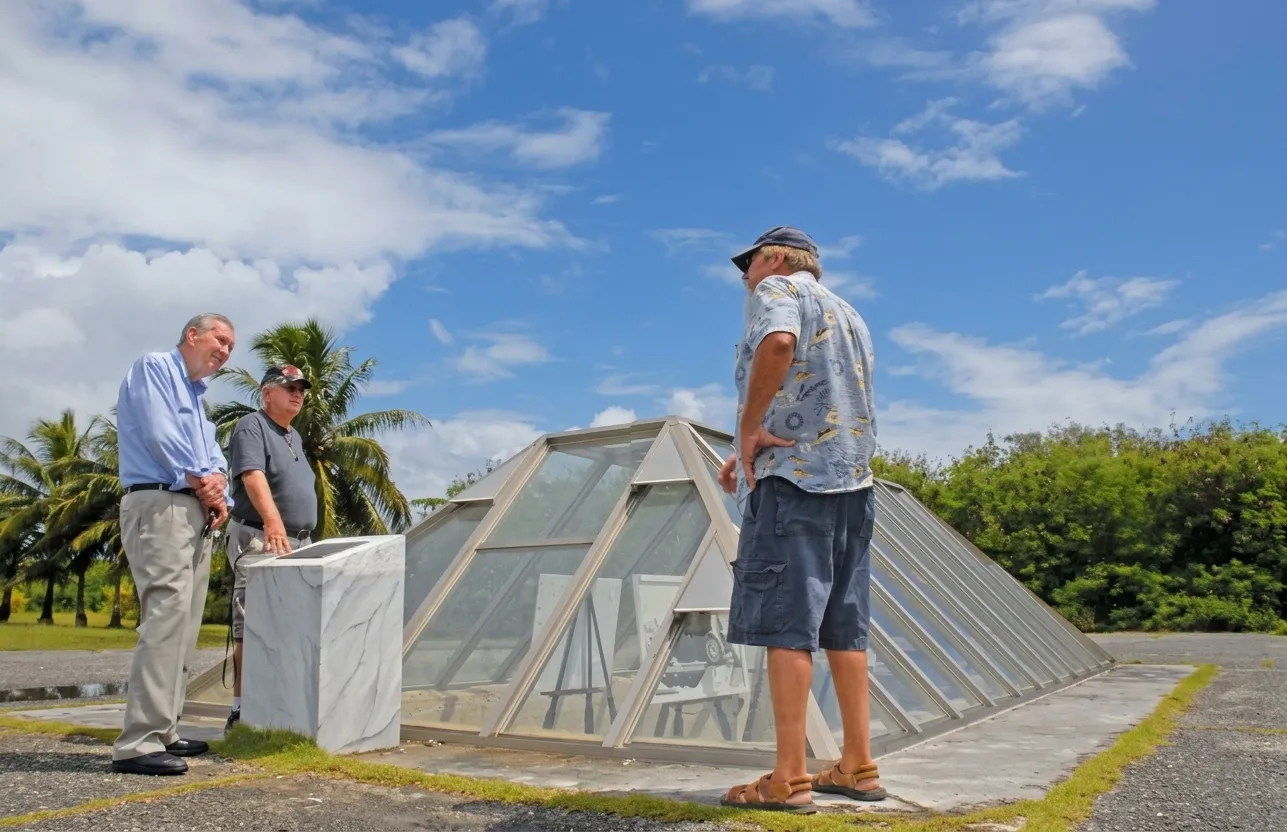
Jerry Facey, who was helping organize the 60th anniversary events, made the arrangements. He brought along Don Farrell, a local historian who knows Tinian’s dirt, its ghosts, and its paper records with the familiarity of a man who lives on the ground he writes about. When Jerry asked if he’d guide us, Don said yes before he had fully caught his breath.
At the airport, we turned north onto a long, straight road cut through green pastures. Don leaned forward from the back seat. The Japanese had built the first rough track out of crushed coral and dirt. When the Seabees took over, they hardened it, widened it, and ran it straight from the southern harbor up to Ushi Airfield—what the Navy renamed North Field. Captain Paul J. Halloran of the Navy’s Civil Engineer Corps directed the paving, handed the job on three months' notice when Admiral Nimitz moved the invasion up from November to June 1944. Captain Halloran, a New Yorker, looked at a fresh map of Tinian, decided the narrow island looked a good deal like Manhattan, and named the coral avenues Broadway, 8th Avenue, and 86th Street.
Our Hap smiled, looked out at the tall grass, and said, "I love him already."
Don took us down to Unai Chulu, marked on military maps as Invasion Beach. Today it is a quiet cove where local families stretch gill nets across the reef on weekends and cook their catch over wood fires under the trees. On July 24, 1944, it was a trap that worked. The Japanese commander, General Ogata, expected the main assault on the wide beaches near Tinian Town to the south. Admiral "Terrible" Turner played along, staging a loud feint off the southern coast with the Second Marine Division. Meanwhile, the Fourth Marine Division landed here at Unai Chulu, scrambling up six-foot coral ledges on portable ramps the Seabees had welded onto the fronts of amphibious tractors. General Holland "Howlin' Mad" Smith called it the most perfect amphibious operation of the war.
From the coast, we drove inland toward the northern tip of the island, where the land flattens out under the Pacific sky. We turned onto Lennox Avenue and stopped near the atomic bomb pits.
They are plain things to look at—rectangular concrete depressions lined with green metal railings, sunken into the grass like disused swimming pools. Standing beside them in the heat, holding a book open to black-and-white photos of men in khaki trousers rolling Little Boy and Fat Man on hydraulic lifts, you feel a sudden, quiet chill.
Work on the weapons had begun in earnest after President Roosevelt signed his brief "OK, FDR" in June 1942. By late 1944, Colonel Paul Tibbets had assembled the 509th Composite Group, and Navy Commander Frederick Ashworth had flown out to Guam to show Nimitz a map of Tinian with a quiet corner circled in blue pencil.
Don pointed out that while visitors often ask for Pit No. 1 and Pit No. 2, the records show both weapons were actually loaded out of the same pit. The military dug a second pit simply because the Manhattan Project left nothing to chance; if a hoist snapped or a cable failed, a spare pit was ready.
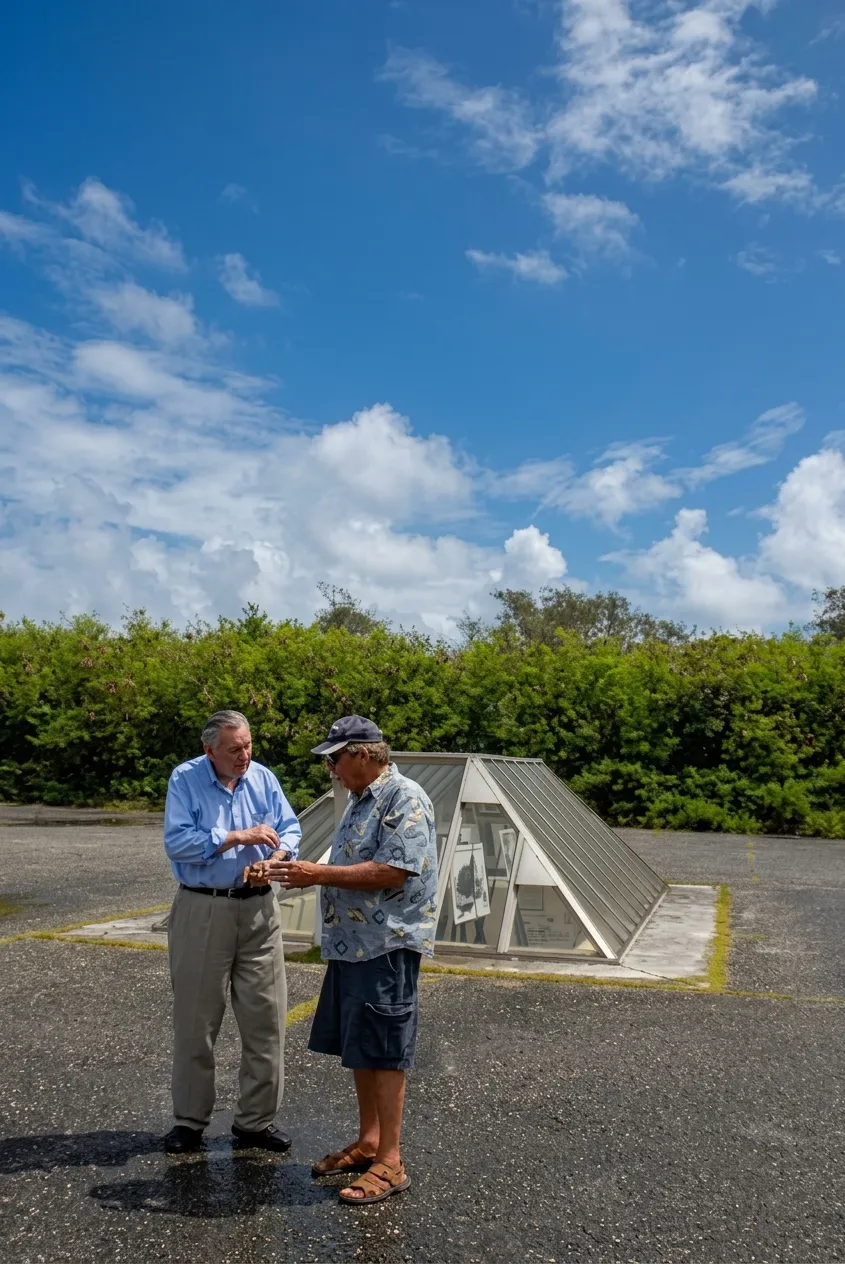
The two bombs were entirely different mechanisms. Little Boy, the uranium bomb dropped on Hiroshima, was crude and straightforward—a gun barrel that fired a uranium bullet into a uranium target to reach critical mass. Fat Man, the plutonium weapon dropped on Nagasaki, was far more complex. It required sixty-four high-explosive charges arranged around a sphere of plutonium no larger than a baseball, detonated within a single millisecond to crush the core down to the size of a golf ball.
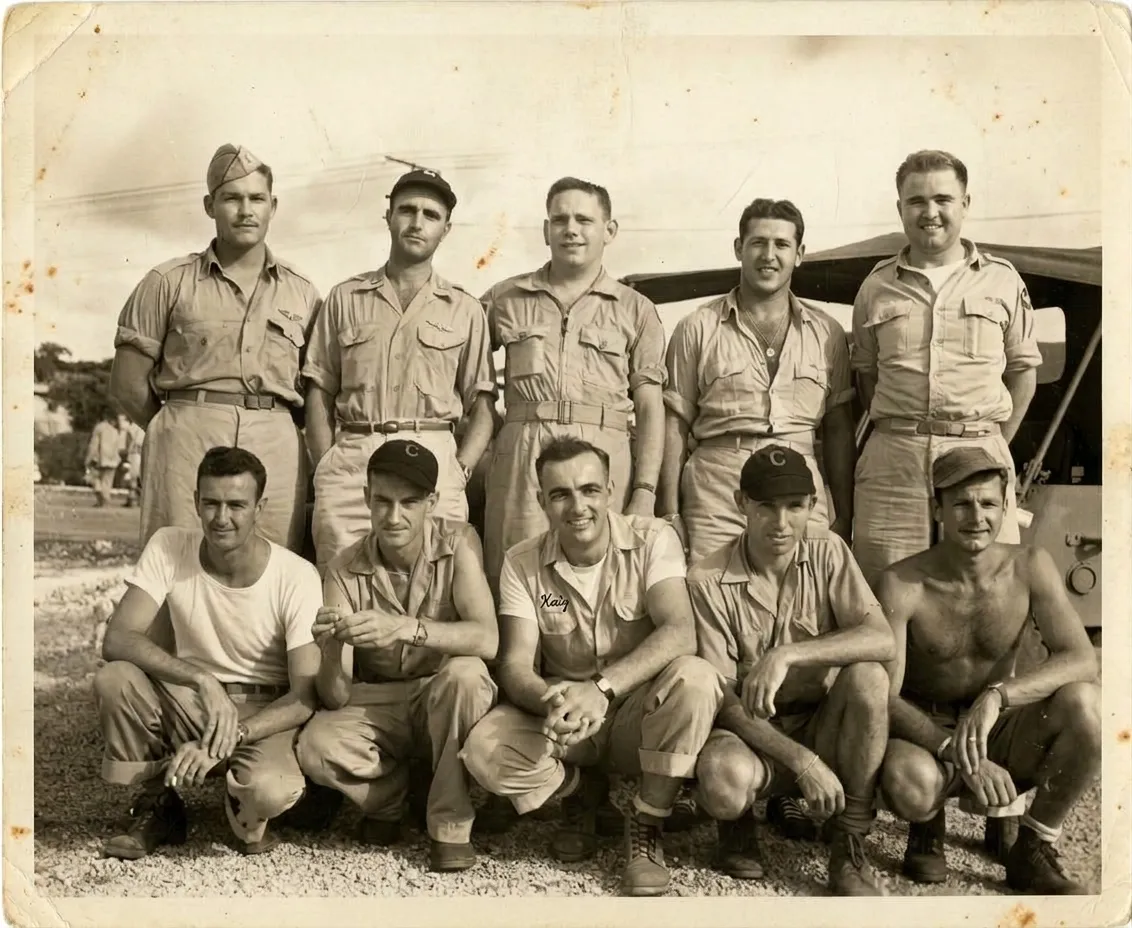
On August 6, 1945, the sky over Japan cleared. Tibbets flew the Enola Gay north, dropped Little Boy, and brought his crew straight home to Tinian.
Three days later, the Nagasaki flight went wrong almost from the start. Major Charles Sweeney took off in Bockscarwith a faulty auxiliary fuel pump that locked six hundred gallons of gasoline out of reach. They flew anyway. Their primary target, Kokura, was obscured by industrial smoke from a firebomb raid the night before. Sweeney made three passes over the city before turning toward his secondary target, Nagasaki, with his fuel gauges dropping fast. Bockscarfound a gap in the cloud cover, released Fat Man, and turned for Okinawa. When the plane landed hard on the runway at Yontan Airfield, its engines were sputtering. Mechanics later drained the tanks and found seven gallons of usable fuel left.
That night in Tokyo, Emperor Hirohito decided the war had to end.
Late in the afternoon, we drove back toward the southern airstrip. We sat for a short while at Fleming’s Hotel, talking over cold drinks. Hap spoke about the Seabees—twelve thousand men who cleared sugar cane, quarried coral, and laid six massive runways so B-29s could take off every fifteen seconds.
Our plane lifted off the tarmac and banked low over North Field. Below us, the four great runways lay silent in the fading light, cracked by decades of jungle growth and sweet fern.
Hap leaned his head against the oval window, watching the empty coral strips slide away beneath our wing.
"Imagine," he said softly, mostly to himself. "Those now deserted runways were once the busiest in the entire world, and it’s at that very spot where the atomic age began. Remarkable."
comments
00