
On October 24, 2018, Supertyphoon Yutu tore the roof off the William S. Reyes Elementary School pavilion in Chalan Kanoa and dropped it on a 1920s Japanese-era house. Only the concrete kitchen, where the Killiliman family rode out the night, still stood.
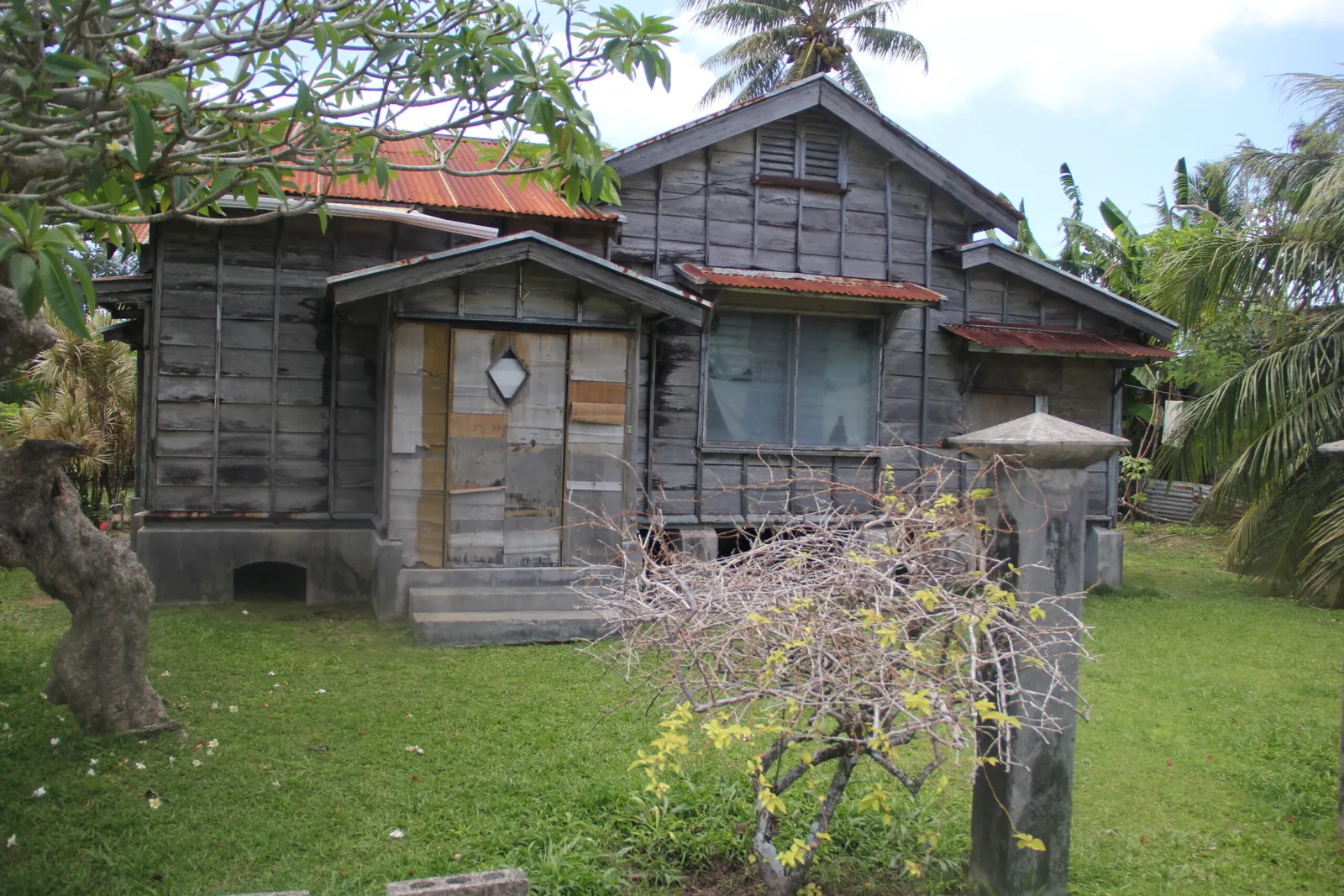
Built of sugi, Japanese cedar that shrugs off weather and termites, the house had outlasted its neighbors for nearly a century.
Preservationists had tried for years to buy it. The government offered a land swap; the owners wanted a bigger lot, and the deal died.
With it went the last Japanese dwellings of the Chalan Kanoa Historic District. What remains of the era: the lighthouse on Navy Hill, the old hospital that now houses the CNMI Museum, the Japanese jail, and pillboxes scattered across the islands.
Amidst the fervent endeavors of a dedicated historic preservation group, a relic from the Japanese era met its demise at the merciless hands of Supertyphoon Yutu, which laid waste to the islands in 2018.
This structure from the prewar period, erected in the 1920s and once inhabited by the Killiliman family in Chalan Kanoa on Saipan, succumbed to the supertyphoon's fury when the roof of the William S. Reyes Elementary School pavilion crashed upon it on October 24th, 2018 leaving behind the concrete kitchen where the family hunkered down during that harrowing night.
Throughout the years, this structure, along with its neighbors, valiantly withstood the onslaught of nature's whims and the insidious advance of termite infestation.
Crafted from the aromatic and resilient "sugi" or Japanese cedar (Cryptomeria japonica), renowned for its formidable endurance against weather and insects alike, these houses from a bygone era stoically held their ground until a ferocious Category 5 typhoon swept away the remnants of their kin.
For quite some time, the local historic preservation office and board diligently explored avenues to acquire the property, with aspirations of preserving it for the generations to come. Though the CNMI government extended an offer of land exchange, the owners opted for a parcel of greater worth, leading to the government's eventual rejection.
With the vanishing of Japanese dwellings in the Chalan Kanoa Historic District, the relics from the Japanese period (1914-1944) that endure include the lighthouse on Navy Hill, the former Japanese hospital now housing the CNMI Museum, the ancient Japanese jail, and the myriad pillboxes strewn across the isles.


comments
00