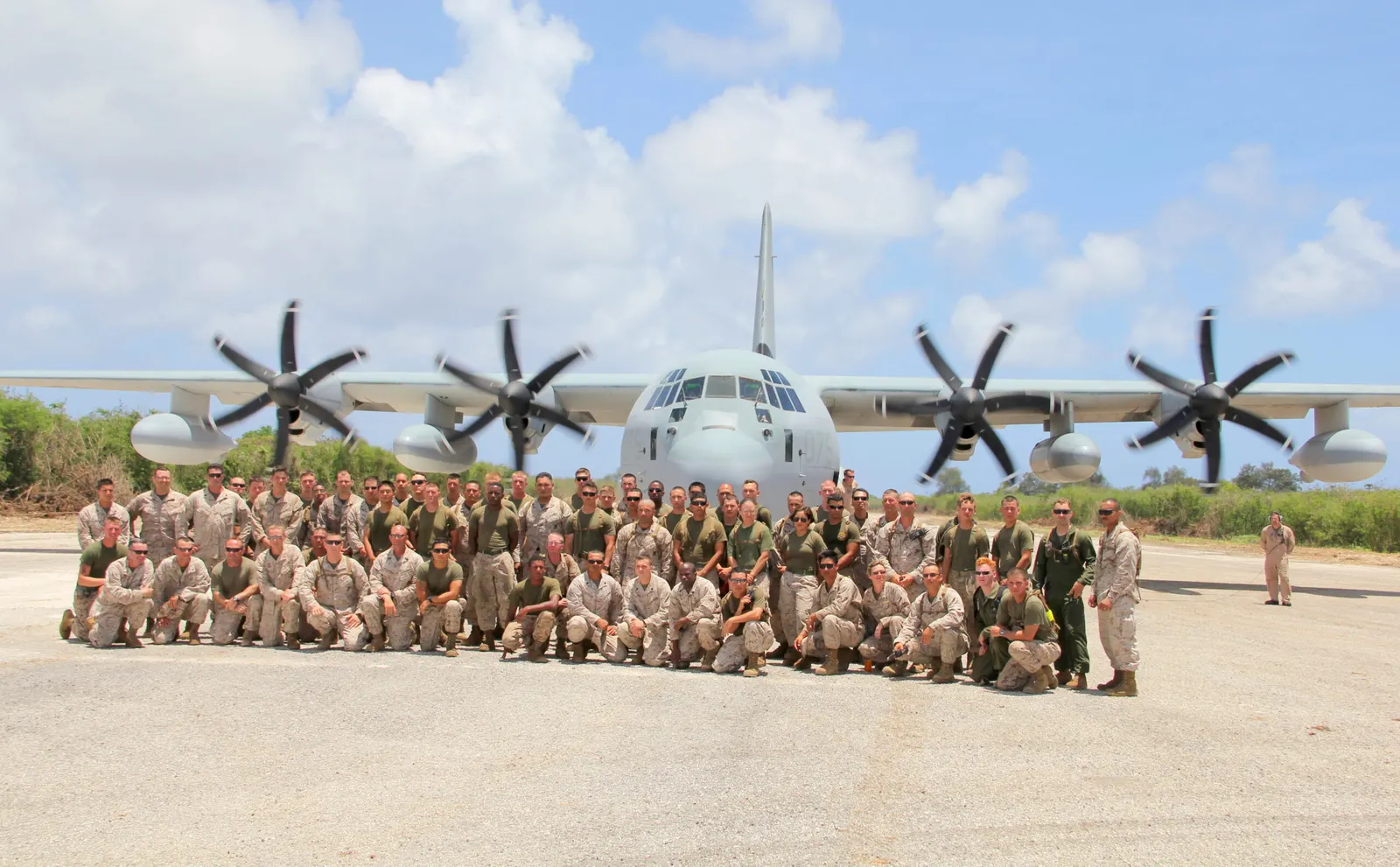
On a Tuesday late in May 2012, a Marine Hercules aircraft came down upon the Baker Runway at North Field on the island of Tinian. It made a brief, heavy landing in the heat. No airplane had touched that particular patch of coral since 1947, when the air left the place and the jungle began its quiet work of reclaiming it.
To bring the runway back took months of patient, stubborn labor. Men of Wing Support Squadron-171 moved through the thick tangle of brush with tools in hand, clearing away sixty-five years of solitude so that a exercise called Geiger Fury might take place.
“Tinian isn’t just another location,” said Lieutenant Colonel Michael C. Taylor, who commanded the squadron. “It carries history, and that gives meaning to everything we do here.”
Nearby lay Able Runway—the long strip of earth from which the Enola Gay once lifted off into the summer sky—still quiet, choked with weeds, and unusable. “From a historical perspective,” said Lieutenant Colonel Thomas Frederick, looking over the quiet ground, “we’re not done yet.”
The mayor, Ramon M. Dela Cruz, who had long held a quiet belief in the island’s purpose for training, stood by and beamed with simple satisfaction. And Lance Corporal Jacob Nolan, watching the big plane rest upon the cleared strip, put the feeling into plain words: “Seeing it happen in person—it’s something else.”


comments
00